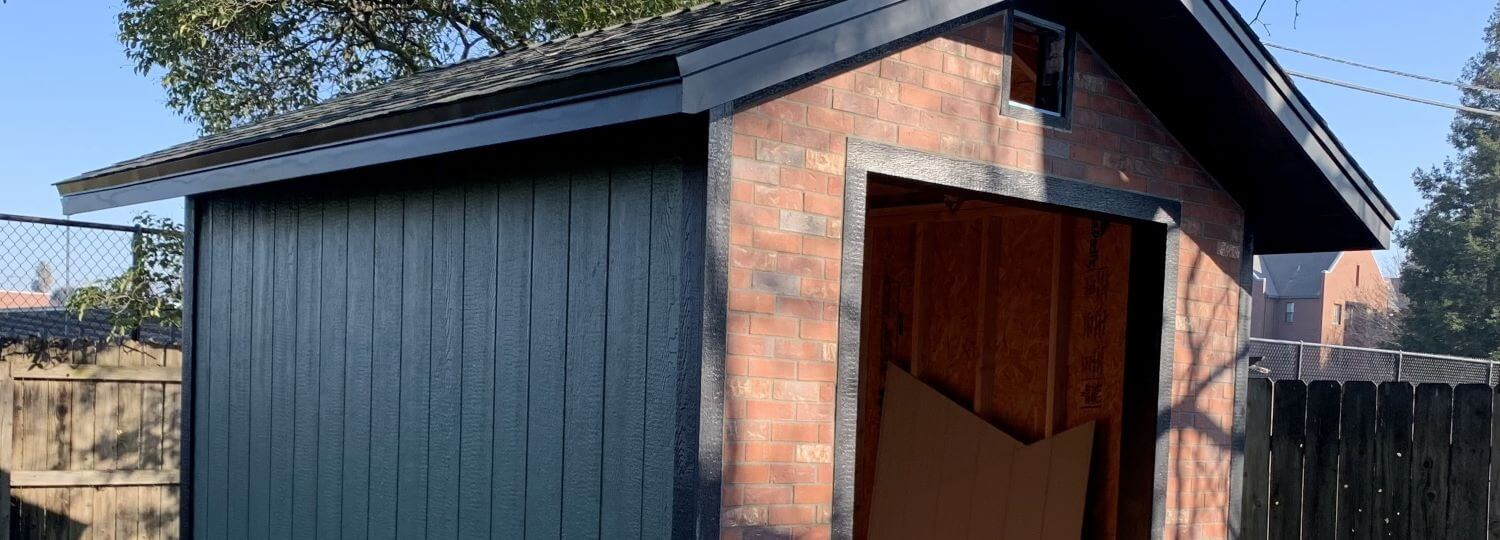
Thin Brick Tile Shed Project
- Home
- Projects
- Residential Tile Projects
- Thin Brick Shed
STOCKTON, CA
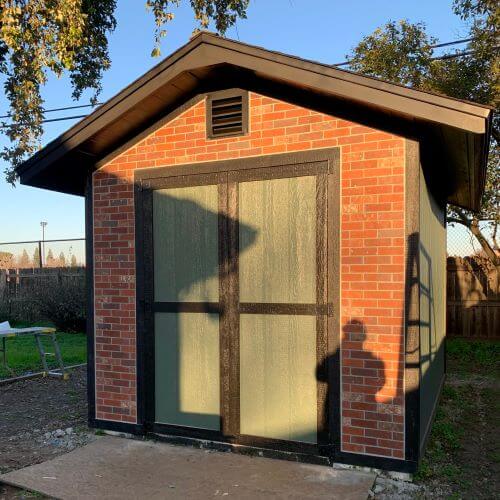
This is a custom 10'x12' shed built from the ground up. It is not a pre-manufactured shed that you can purchase from the big box stores or online. Although there are some standard similarities, we are not here to go into many details about building a shed vs buying one.
We are going to talk about the process of installing the thin brick on the face of the shed. Including:
- the prep work
- waterproofing methods that we used
- installing the thin brick
- grouting the mortar
- and options for protecting it from the elements.
Shed Build Background - Design Process Overview
In the state of California, one is allowed to build a shed on their residential property, or a similar non-dwelling unit / enclosed structure, up to 120 square feet, without pulling any permits. The measurements are taken from outside of the finished walls.
This was a project in Stockton, California that involved a family of four with their participation.
The original idea was to just build a standard sized 10'x12' shed. Anything larger would require permits. There were various ideas and customizations along the way.
One aesthetic customization was installing thin brick on the face of the shed, instead of continuing with the siding. And that's where California Custom Tile comes into the picture.
Exterior Shed Prep And Finishes
After the walls of the shed were erected, the rafters for the roof was built and installed. The custom built rafters had an initial overhang extending 16 inches around the perimeter on all sides.
Then the exterior framing was encapsulated with OSB (oriental strand board) sheathing. And then covered with a synthetic house wrap.
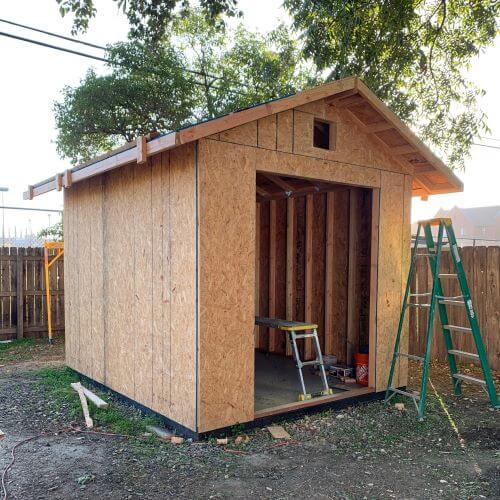 Shed with OSB Sheathing.
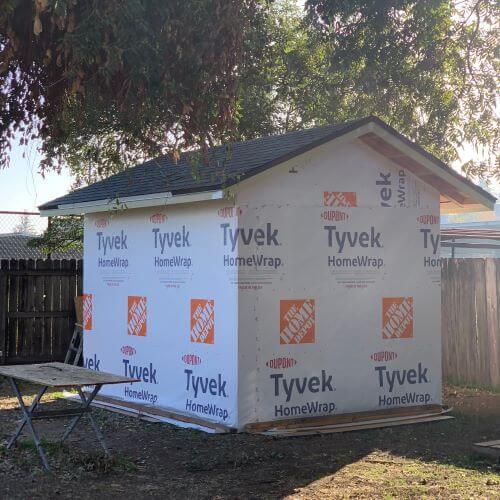 Shed with HomeWrap.
During this time with purchasing and installing the siding, they started to contemplate and consider installing thin brick tile on the face of the shed. The reason being was to match the brick facade on the front of the house, plus it would add a bold and modern custom look to accent their paint scheme.
Preparation For Thin Brick On A Shed
We went over multiple options for suitable substrates and extended waterproofing methods. To stay within the budget and time restraints, this is the route we agreed on...
We used 1/2" inch thick HardieBacker fiber-cement board, with 2-1/4" length backer board screws to fasten it into the studs. Covered the screws and seams with flexible waterproof caulking...
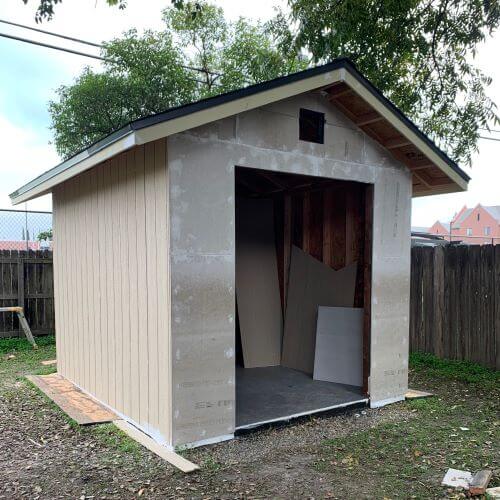 LP SmartSide siding with 1/2" HardieBacker fiber-cement board on the shed.
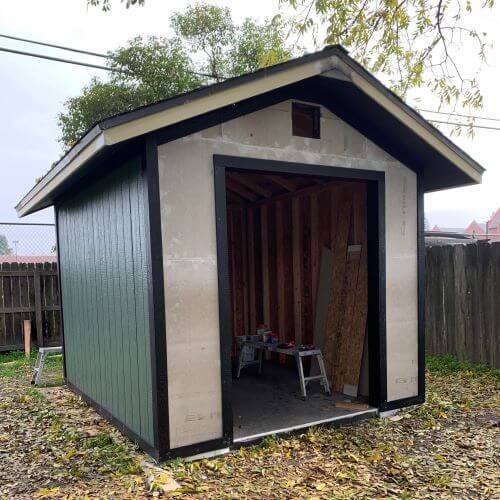 LP SmartSide siding and trim painted, and HardieBacker on the face of the shed.
Then applied three coats of Laticrete Hydro Barrier liquid waterproofing membrane on top of that.
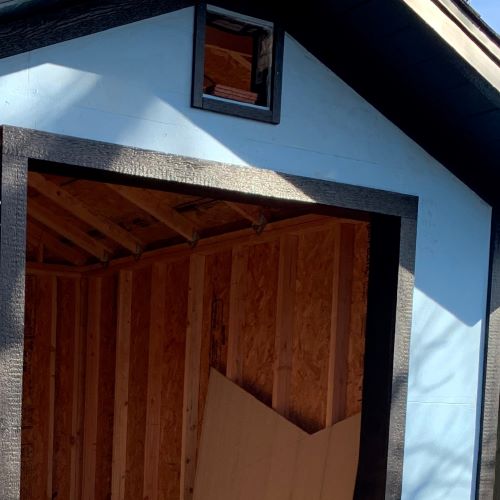 HydroBarrier Plus liquid waterproofing membrane on the shed wall.
Installing The Thin Brick
Traditionally, the most common standard mortar joint is 3/8" for bricks. Although, required spacing is typically from 1/4" to 1/2". The lady preferred a smaller mortar joint, so we went with 1/4 inch.
The siding and trim manufacture's recommendations is to not butt up brick and mortar directly to it, and to remain at least 3/8's of an inch away from it. More on the remedy for the mortar application along the edges in a just a minute.
Getting Our Layout
Next was the layout.
We laid out some of thin brick tiles on the ground floor of the shed slab. We set them long length ways with 1/4" spacers in between each one. And took a story board of measurements of those tiles.
Then we took measurements to center the wall. Transferred our measurements that we gathered from our layout on the ground, from the center, to each of the left and right side legs that run vertically along the sides of the doorway. Then we pencil marked level lines on the left and right side of each leg so that we could determine what our cuts are going to be.
For our brick pattern, we offset our brick by 50% on center, and repeated the steps above to mark our pencil lines to determine our cuts.
From top to bottom, it was much simpler. We wanted to make sure that we had full tiles along the bottom trim, and along the top of the doorway trim. We were able to achieve this with a little luck from the "tile gods" and some minor adjustments during installation.
Remember when I said that we needed to have 3/8's of an inch between the trim and the thin brick? We used 3/8" door stop trim as our spacing between the trim and the thin brick. This made installation go along a lot easier and efficient.
To get started, we made a few cuts on our wet tile saw. Performed a dry fit layout to make sure that they were going to work adequately on the wall. Perfect! Set a gauge and made all of our cuts to run up both side legs of the wall.
We mixed up an exterior grade thinset mortar and installed the thin brick.
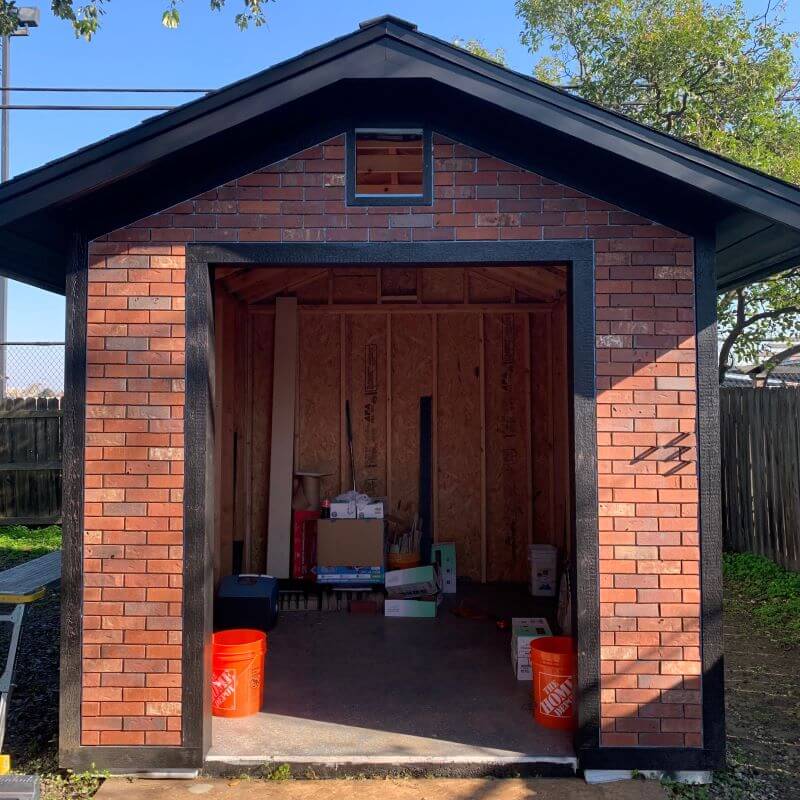
Addressing The 3/8" Gap Along The Trim
Since we should not use mortar against the trim, here's how we tackled that issue...
First, we inserted a 3/8" backer rod (flexible and compressible foam rope) into the gap between the trim and thin bricks. We masked off the trim and brick with painter's tape. Then we applied a mortar matching colored silicone waterproof caulking, fully into the entire gap.
I bet you've been wondering why it took this long to let you know why? This helps to prevent moisture (that has accumulated into the brick and mortar from the outside elements) from constantly staying in contact with the trim, which will cause it to deteriorate much quicker.
Prior to moving forward with applying the actual mortar, we need to allow the caulking to dry overnight so as not to disturb and cause it to smear out all over the place. That's stuff is annoyingly sticky!
Thin Brick Mortar Application
There were a couple other choices to make, this time it was in regards to the mortar mix and the finish look of it.
We've used various types of mortar mixes for thin brick applications over the years. This time, we decided on using Quikrete's ProFinish Mason Mix. It's a Type S, high strength structural and crack resistant mortar.
The main thing that was up for debate was if it should be "tooled" like traditional brick, or grouted flush like standard tile. We can do either one that you choose. After some brief conversations, we ended up just grouting it without tooling it. And it looks amazing!
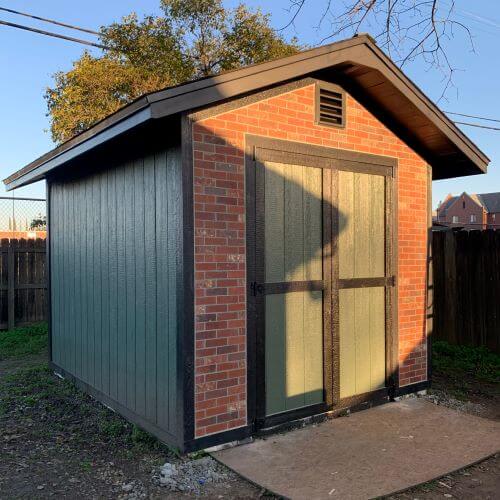
Thin Brick Sealers and Enhancers
Sealers and sealing enhancers will help protect your thin brick tile and mortar from the elements.
After waiting the allotted amount of time for your mortar to cure, usually about 7 days, then you can apply a sealer on the thin brick and mortar.
We considered a semi-gloss or a glossy sealer for a shiny wet looking finish, but chose a matte finish for a more natural look.
Hope this helps you out with your thin brick tiling project.
Feel free to reach out to us with any questions, or contact us if you're interested in our tile installation services.
You might like these...
Gold River, CA Dental Office Tile Project - Lobby Wall and Restroom
This is a tile project that we completed at a dental office in Gold River, a city next to Rancho Cordova and Folsom in Sacramento, California.
Kitchen Backsplash Tile Pictures
These kitchen backsplash tile pictures are a portfolio of projects that we've tiled. Modern ideas and inspiration for tiling behind your stove and sink walls.
California Custom Tile's Commercial Projects
Check out California Custom Tile's commercial tiling projects. Includes walls and floors in dental offices, restaurants, hotels, stores, and more.
California Custom Tile's Residential Projects
Check out California Custom Tile's residential tiling projects. Categorized by city and/or project name. For new houses and home remodels.
California Custom Tile Projects
California Custom Tile's projects. Our work portfolio of commercial and residential jobs. Service area locations of the cities we travel to from Stockton.







Share Us With Your Peeps On Your Socials
Dreaming of a brand new luxurious master bathroom? Looking to remodel that outdated kitchen with a modern counter top and beautiful backsplash? How about updating those old worn out floors with something a bit more durable and timeless? Perhaps you’re in need of some fresh and elegant ideas for your brand new custom home?
Look no further because we’ve got you covered!!
We provide tile installation services to home owners and general contractors for residential and commercial projects!
Find us on social media


Copyright © CaliforniaCustomTile.com | All Rights Reserved | Reproduction Prohibited